

Laos, First Breath


Hello everyone! Glad to see you here again, and thanks for all your support.
It’s again time to share Tamara‘s travel adventures, collected in My Travel Diary Chronicles.
This is the first chapter of a long and amazing series about Laos. There are plenty of emotions, sensations and beauty and I’m sure you’ll be grabbed by the hand and walked into an incredible experience.
This story starts with a breath.
Laos does not announce itself with a panorama, but with a sensation.
You experience Laos first with your body, before your eyes: a fine dust settles on the skin, hushed voices fill the spaces, scents of fresh herbs and spices.
The air holds the smell of scorched earth and the light smoke rising from the villages.
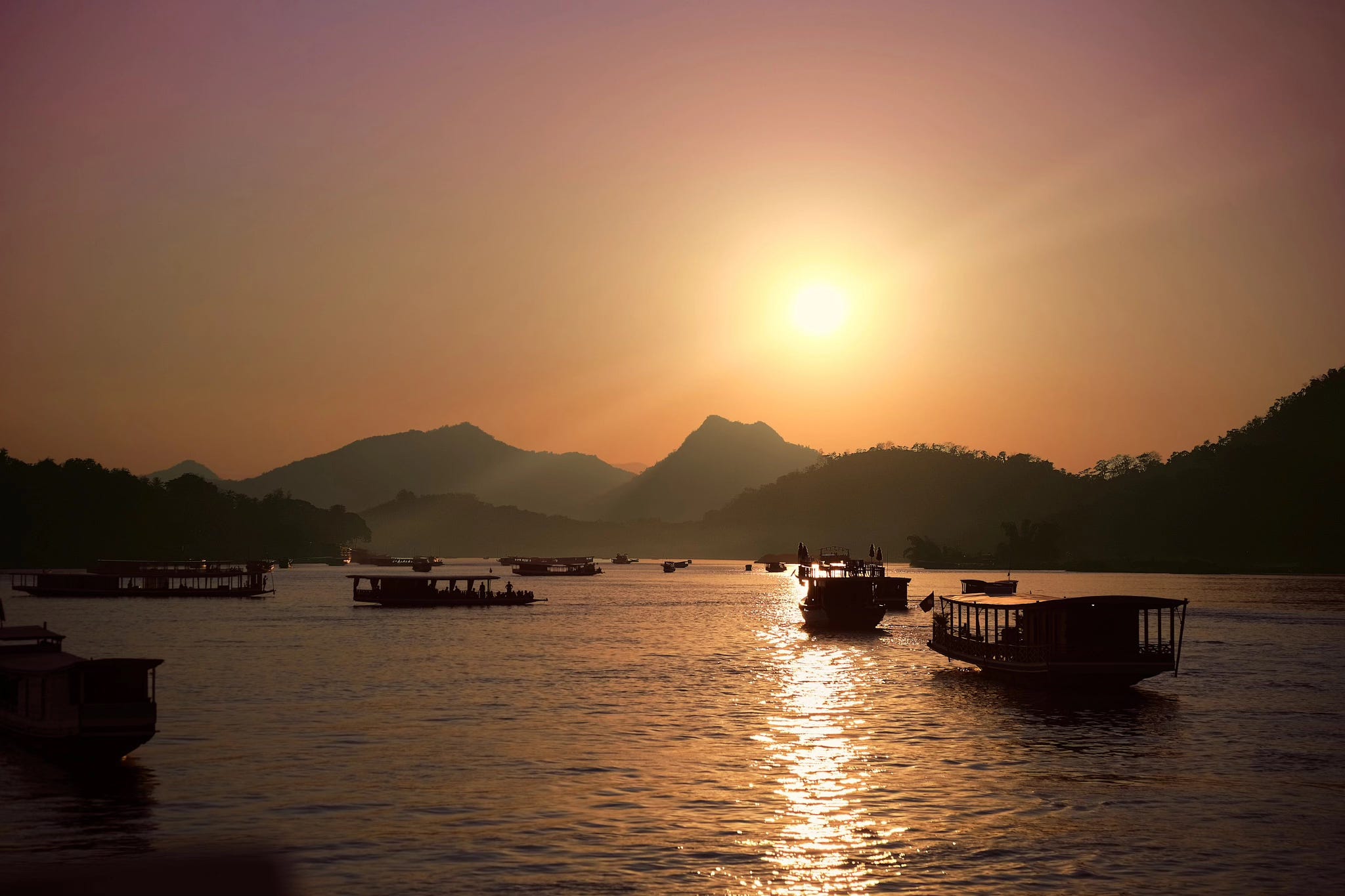
The Mekong flows wide and silent, reflecting milky skies between ochre-colored banks. In Luang Prabang, time lingers beneath the golden roofs of the temples. Yet a deeper call comes from the west: the forest of Sayaboury.
At the Elephant Conservation Center, the most powerful symbol of this land emerges.
Laos was once called Lan Xang, the Kingdom of a Million Elephants: a name that tells of the central role these animals played in the country’s economic, spiritual, and cultural life.
Among pools of water and red earth, the elephants’ breathing sets the rhythm of time. Sharing their space means stepping into an ancient story and learning the humility of one who observes without imposing. Here one does not come to touch them, nor to feed or ride them, but to watch and learn how to remain, on tiptoe, within a fragile and precious balance that smells of wet soil, leaves, and possible futures.


Today, coexistence between humans and elephants is fragile.
Deforestation and intensive agriculture have reduced their living spaces, fueling silent conflicts.
The Elephant Conservation Center was created to attempt a balance: to protect the animals, offer sustainable alternatives to local communities, and restore dignity to a broken relationship. It is not a utopia, but slow work, made of patience and compromise. Conservation is not separation, but coexistence. And to coexist, today, is the greatest challenge.
Heading north, you reach Houayxay.
From here you enter the forest of Nam Kan National Park, home to the black-crested gibbon, an elusive creature that lives almost exclusively among the treetops. From the ground it is rarely seen: its world is high above, in the spaces between treetops, a vibrant void where branches barely touch each other.
For three days I live suspended.
I glide among the trees on a zipline, like an animal out of context yet allowed to remain. The body lets go of the rules of the earth and learns the rhythm of the air.


Beneath me, the green shatters into depth, dissolving into a pinkish mist that slowly rises through the foliage. The treetops appear and disappear, floating islands in a milky sea. Above, the sky opens into full blue. I no longer belong to the earth, nor entirely to the air.
I remain suspended in between.
At night, I sleep in a treehouse, gathered as in a nest. Living wood under my feet, the wind moving through the leaves, the darkness pierced by distant calls. Space rearranges itself; gravity feels lighter. With my gaze at the height of birds, the mind lightens and the world becomes simpler, essential, surprisingly inhabitable.
In Luang Namtha, I prepare to enter the Nam Ha forest, the one that allows neither detours nor indulgence. The trek requires a local guide: not only to navigate a territory that rejects maps, but for a quieter reason.
Unexploded ordnance from the “secret war,” fought in Laos during the Vietnamese conflict, still lies beneath the soil, turning knowledge of the land into a matter of survival.
The path follows the ancient hunters’ trail.
We advance through teak, lianas, and mud, with the short breath of those who did not grow up on these slopes. The body struggles, adapts, learns. We gather tender bamboo shoots, bitter leaves, wild roots: what the jungle grants to those who know how to recognize it.
Night falls quickly.
The fire crackles as the darkness takes voice: insects, rustlings, distant calls intertwine in a primordial language.
The next day, I reach a village of the Khmu ethnic group, one of the oldest populations in northern Laos.
Animists, guardians of a worldview in which spirits, nature, and daily life are inseparable, the Khmu have lived here for centuries.
Their houses are simple, gestures reduced to the essential, smiles measured. Here time does not proceed in a straight line: it settles, returns, circulates. Encounters unfold without words; simply being there is enough.


Returning to Luang Prabang marks a subtle change of rhythm.
Walking through lively streets, the French colonial houses line up with a grace that draws no attention. You touch an era that endures: pale façades, half-closed wooden shutters, balconies with arches and columns where light filters with respect. An architecture that still breathes in the shadowed doorways and on stones worn by time.
I enter the Royal Palace and the temples that punctuate the city like pauses of silence.
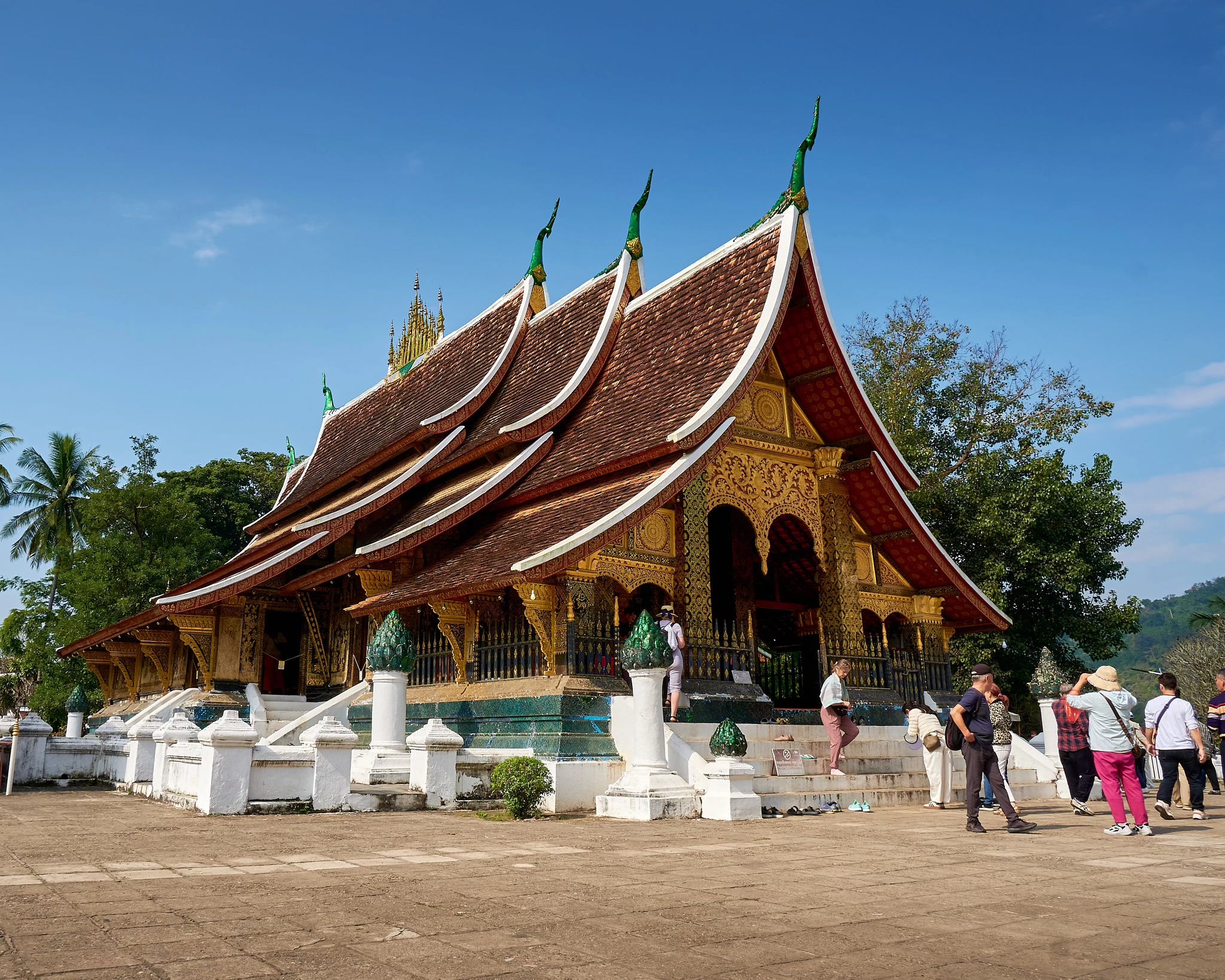
The overlapping roofs, sun-faded finishes, and cool porticoes speak of a discreet, never ostentatious spirituality. Here Buddhism does not present itself as a spectacle, but can be sensed in daily gestures: in the slow steps of monks at dawn, in the scent of incense drifting among the columns, in the deep sound of bells, which seems to measure breath rather than time.
In the evening, I board a boat.
At sunset, the Mekong becomes dark silk, its course widening and calming as the sky fades into tired oranges and pinks.
I dine as the light fades, carrying with me the feeling of the forest’s deep breath and the slow, deliberate steps of the elephants, which teach the proper weight of things, and the Mekong, wide and silent, which continues to flow, carrying away what must be let go.
Take care and talk soon!
Matteo and Tamara, your experience and pictures in Laos is inspiring. Your journey through this country, with your highlights wonderful. Thank you for sharing!
Hola , Excelentes Fotografías Y Fascinante Historia. Hace Años Recorrí En Motocicleta Un Montón De Paises Del Este Asiático Y Leyendo Este Relato , Me Emocione Recordando Las Maravillosas Personas Que Uno Encuentra A Cada Kilómetro Que Recorre En Su Camino. Un Saludo.